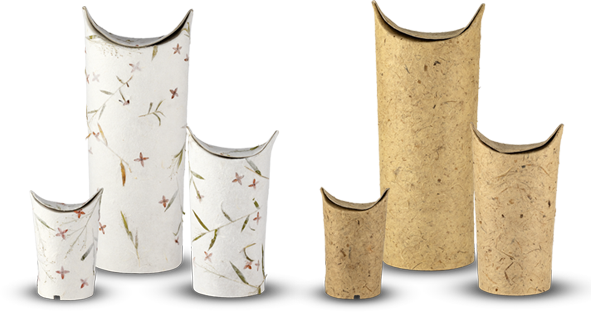
Biodegradable scattering urns
BIODEGRADABLE SCATTERING URNS
From natural materials to a more responsible farewell.
Sustainable business practices are at the heart of our Corporate Social Responsibility (CSR) policy. We strive to offer products that not only have a lower environmental impact, but also reflect a responsible approach to raw materials, production and use.
Our biodegradable scattering urns, also known within the funeral industry as scattering tubes, are a tangible example of this approach. They were developed in response to the growing demand for environmentally friendly and responsible alternatives to conventional scattering urns.
From renewable mulberry bark to handcrafted production, natural drying and a fully biodegradable finished product: sustainability is integrated into several stages of the value chain.

A natural and renewable raw material
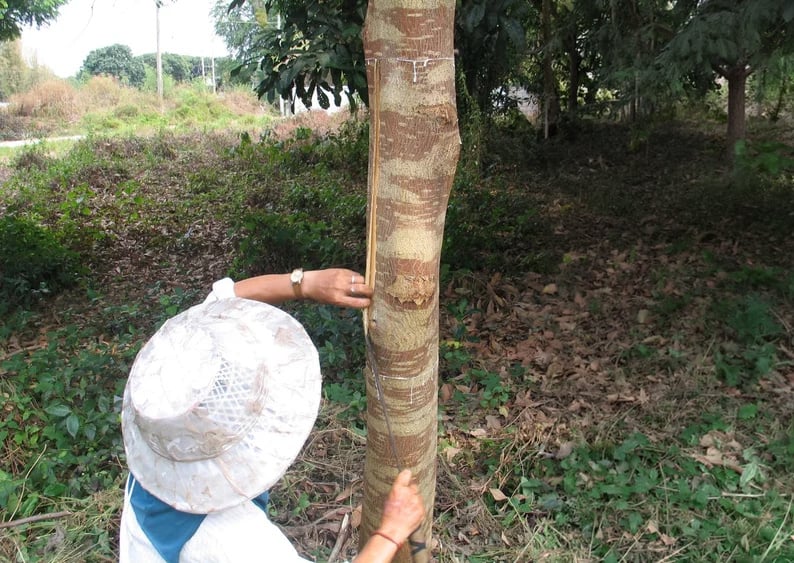
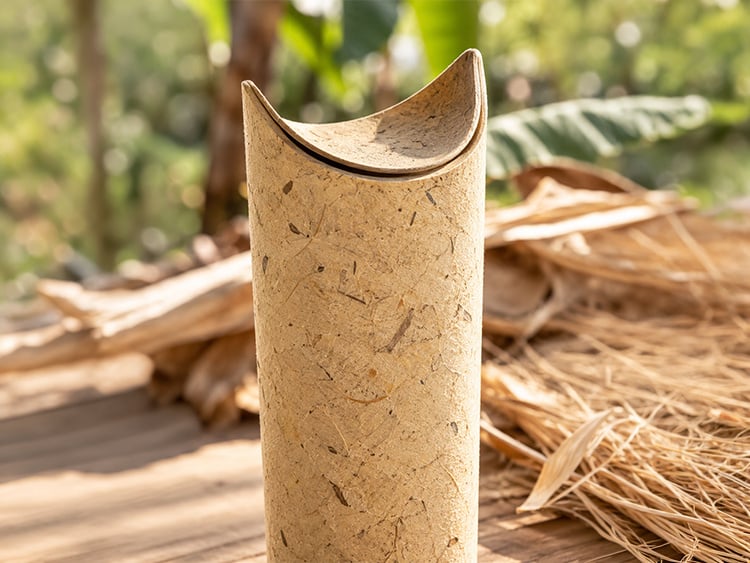
The scattering urns are made from the bark of the mulberry tree. This natural, renewable raw material can be harvested without cutting down the tree.
In spring, the bark can be removed from the tree, after which new shoots grow back quickly. This allows further material to be harvested without deforestation. In this way, natural resources are used responsibly and the impact on ecosystems is reduced.
The natural origin of the material therefore quite literally forms the foundation of the product.
Craftsmanship with consideration for the supply chain
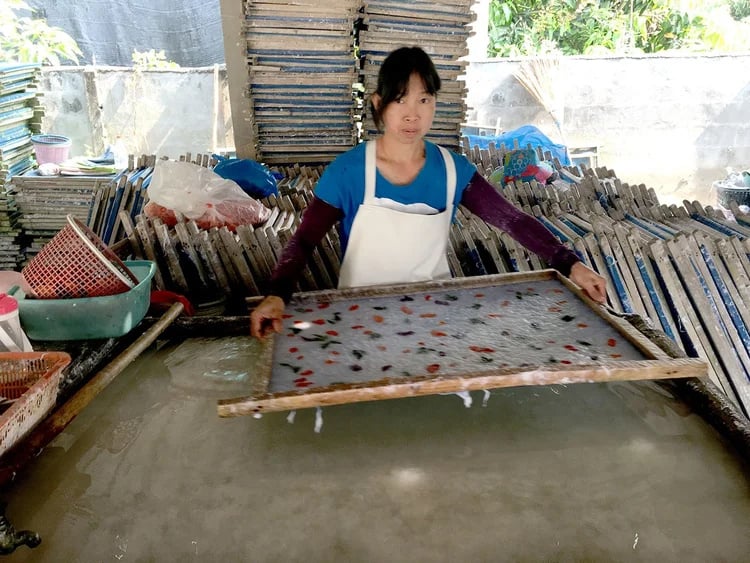
The urns are handcrafted in Thailand using traditional techniques. Conscious choices are also made throughout the production process. The products are dried naturally using sunlight, minimising energy consumption and the use of harmful substances.
At the same time, handcrafted production supports local employment. Sustainability within this product group therefore extends beyond materials and the environment to include the people involved throughout the value chain.
Furthermore, the production facility has undergone a SMETA 4-Pillar audit. This assesses labour standards, health and safety, environmental management and business ethics. Working with an audited production partner contributes to responsible supply chain management and the continuous improvement of our value chain.
Innovation within a traditional product category
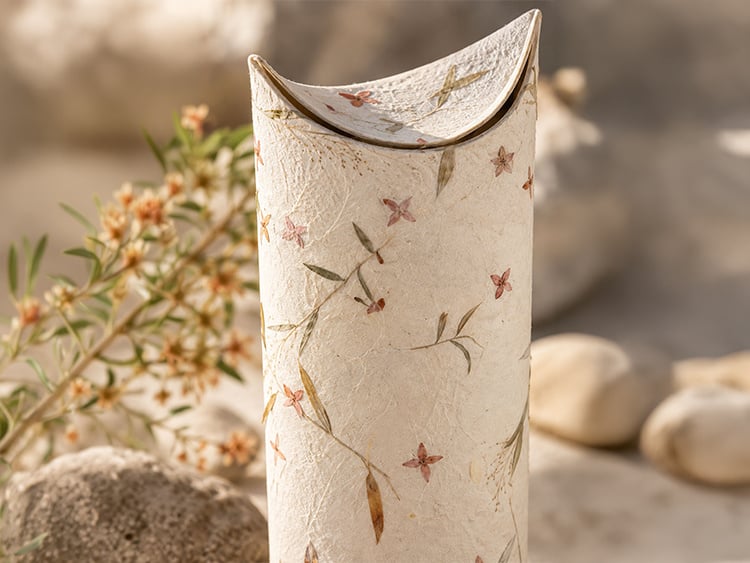
The innovative value of the collection is reflected not only in its materials and production methods, but also in the way the product is used. The scattering urn is designed to allow ashes to be scattered respectfully and in a controlled manner.
Many conventional scattering tubes are made from cardboard with a thin plastic coating. Combining different materials makes recycling after use more difficult. By contrast, the biodegradable scattering urn is made entirely from natural raw materials and contains no plastic coating or material combinations that are difficult to recycle.
After use, the material can biodegrade completely without leaving harmful residues, or be recycled as paper waste. This provides an alternative that responds to the growing demand for more sustainable approaches to farewells and remembrance.
Natural symbolism
Alongside their functional and sustainable qualities, the designs also reflect a thoughtful approach to symbolism and natural aesthetics.
The paper urns are enhanced with natural elements, including Ixora flowers and banana leaf fibres. These give each product its own distinctive character and strengthen the connection between the product and its natural origins.
Materials, appearance and purpose come together in a memorial product suited to a farewell in harmony with nature.
From sustainable choices to measurable impact
A more sustainable alternative only creates meaningful value when it is actually adopted. Since the introduction of this product group, an increasing number of families and bereaved relatives have chosen biodegradable scattering urns. This makes the impact of sustainable product development visible in practice.

1,313
biodegradable
scattering urns chosen by
families and bereaved relatives
275.2 kg
conventional
cardboard replaced

11
countries in which
biodegradable scattering
urns have been purchased
* Period: February 2025 to September 2026.
Direct impact throughout the value chain
The impact of this product group does not result from one individual choice. Materials, production, functionality and supply chain responsibility reinforce one another.

Natural raw materials
Made from natural and renewable mulberry bark.
Biodegradable
Fully biodegradable or recyclable as paper waste.

Low-energy production
Natural drying using sunlight.

No plastic coating
No difficult-to-recycle combination of paper and PE plastic.

Responsible production
Manufactured by a production partner audited against SMETA 4-Pillar requirements.

No deforestation
Mulberry bark is harvested without cutting down the tree.
Contribution to the Sustainable Development Goals
This case addresses several material CSR topics within our CSR management system. The choices made also contribute to several of the United Nations Sustainable Development Goals (SDGs).

8 – Decent Work and Economic Growth
Topic: Social responsibility in the supply chain
Handcrafted production supports local employment in Thailand. SMETA 4-Pillar audits contribute to safeguarding fair working conditions and workplace safety.
9 – Industry, Innovation and Infrastructure
Topic: Sustainable product innovation
An innovative alternative within a traditional product category, contributing to progress throughout the value chain through more sustainable product choices.

12 – Responsible Consumption and Production
Topic: Sustainable material selection
Fully biodegradable or recyclable as paper waste, without plastic coatings or composite materials.
15 – Life on Land
Topic: Renewable raw materials
Mulberry bark is harvested without deforestation. The use of natural and renewable materials helps reduce the impact on ecosystems.
Explore our CSR results and objectives →
From ambition to action
Our biodegradable scattering urns demonstrate how innovation throughout the value chain can lead to tangible improvements in sustainability and social value.
Even within a traditional product category, there is room for change. By consciously choosing renewable materials, responsible production methods and partnerships with organisations that share our values, we turn our CSR ambitions into tangible products and measurable results.