
Mycelium urns
BIODEGRADABLE MYCELIUM URNS
From organic waste materials to a meaningful memorial.
Sustainable business practices are central to our Corporate Social Responsibility (CSR) policy. We aim to offer products that not only take the environment into account, but also demonstrate a responsible and meaningful approach to raw materials, production and use.
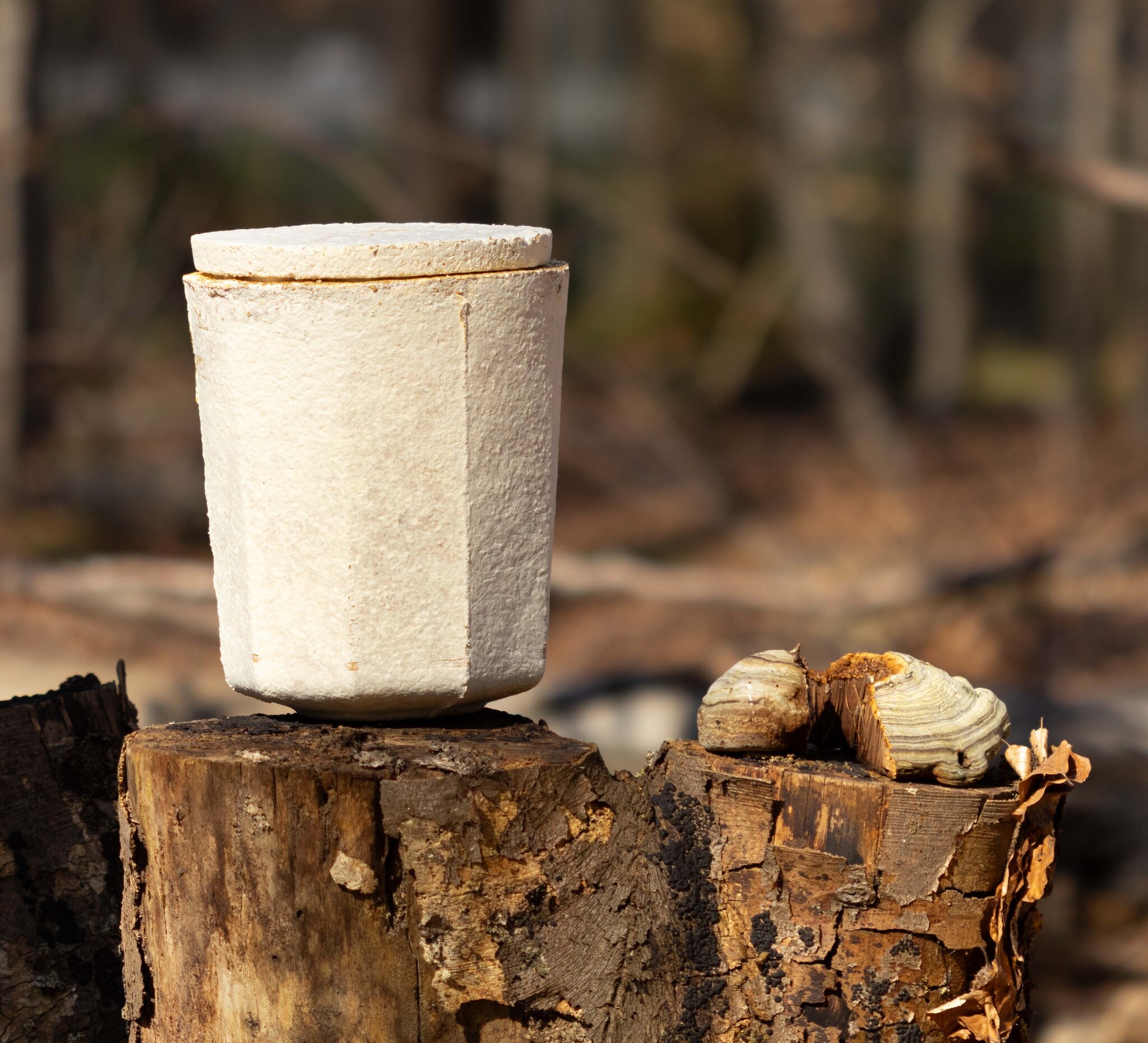
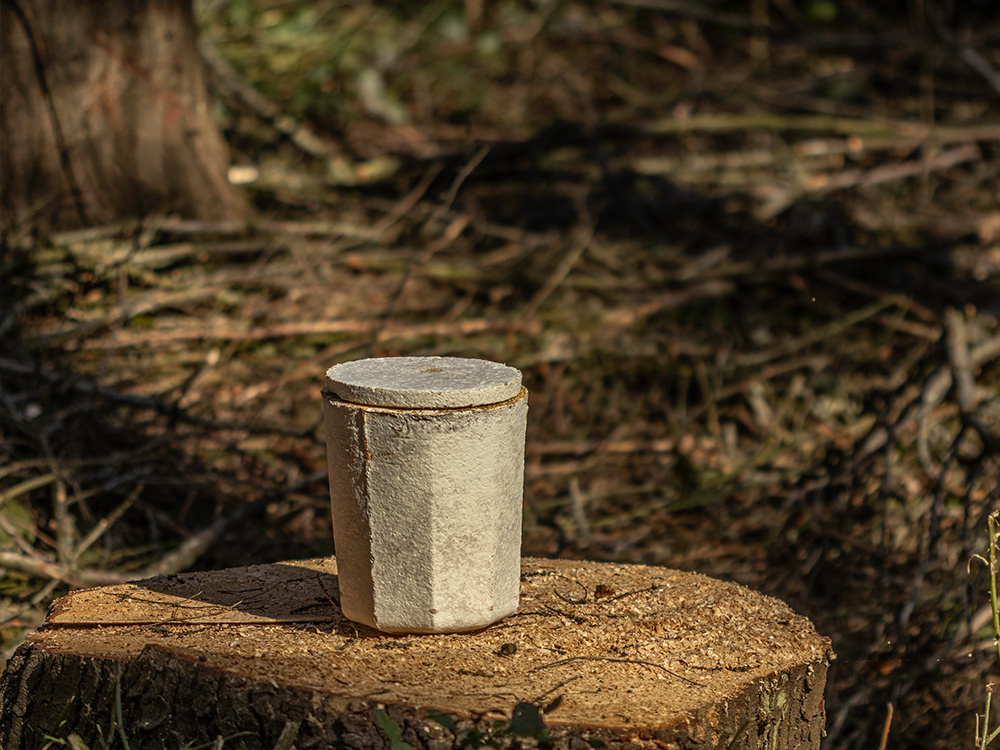
The biodegradable mycelium urn is a remarkable example of this approach. An innovative memorial product that is not manufactured in the traditional way, but literally grown from organic waste materials generated by shiitake cultivation.
With natural raw materials, local production and a fully biodegradable finished product, this urn demonstrates how circular innovation and a meaningful farewell can come together.
Grown, not manufactured
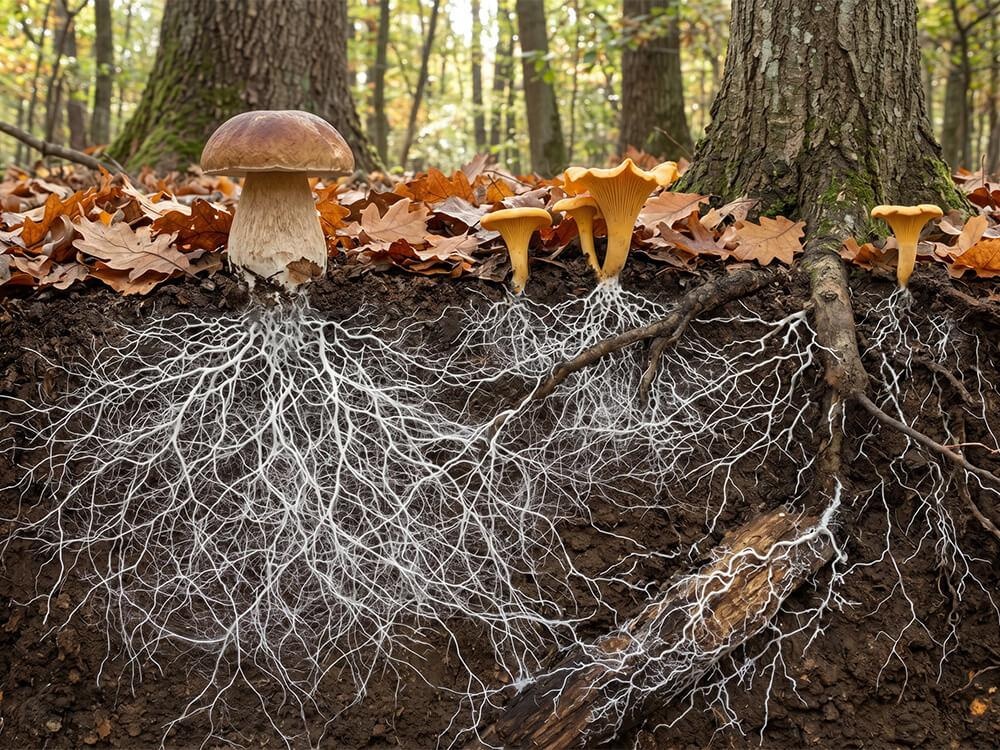
Mycelium is the underground network of fungal threads from which mushrooms grow. This natural network forms a strong structure as the fungal threads bind together with organic material.
Where traditional manufacturing processes often require raw materials to undergo intensive processing, the mycelium urn is formed through a natural growth process. The material grows on by-products from shiitake cultivation, giving them a new purpose.
The result is a sturdy, shape-retaining urn made from natural materials, without the need for glue, plastic or artificial binding agents.
From waste material to memorial product
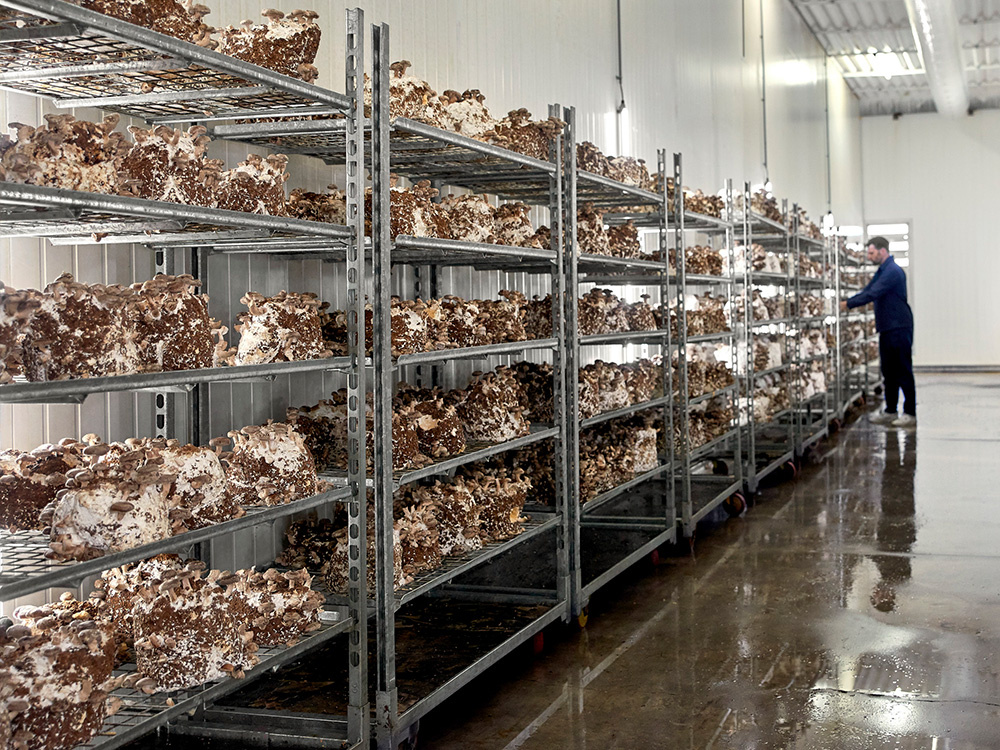
The production process begins with a Dutch shiitake grower. Mycelium and sawdust are used to cultivate the mushrooms. After harvesting, the substrate is no longer suitable for further food production, but that does not mean it has lost its value.
The organic waste material is reused and placed into a mould. Under controlled conditions, the mycelium grows into a strong, shape-retaining urn in approximately eight days.
The mycelium acts as a natural binding agent. In this way, a by-product from the food supply chain is transformed into a valuable memorial product without the addition of artificial binding agents.
A completely natural cycle
The mycelium urn demonstrates how circular use of raw materials works in practice. Organic waste material from food production is given a second life as a memorial product.
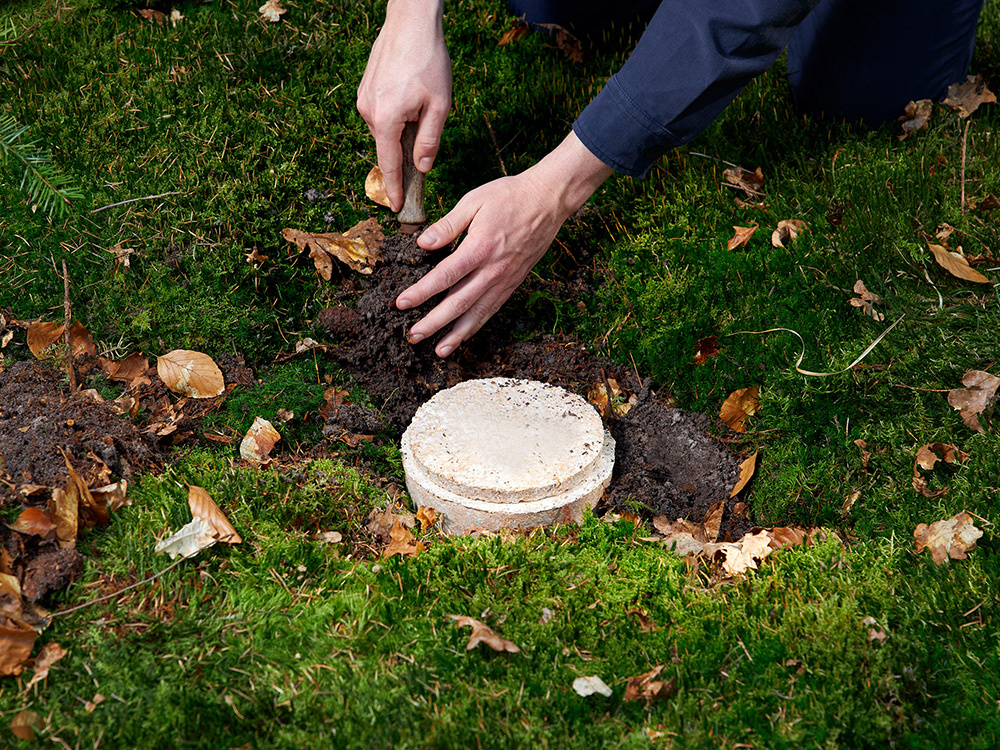
The urn is made from natural materials and is fully biodegradable. After burial, the material breaks down naturally in the soil, leaving no plastic or artificial binding agents behind.
The organic components return to the natural cycle. This makes the urn an alternative to memorial products made from materials that are less readily biodegradable.
A meaningful return to nature
Alongside its sustainable properties, the mycelium urn also carries a special symbolism. The product is grown from natural materials that previously served another purpose. After use, the material returns to the earth once more.
This natural cycle reflects the connection between life, farewell and new beginnings. A memorial product that not only offers a dignified farewell, but also illustrates how nature continually renews itself.
In this way, love, sustainability and new life come together in one meaningful product.
From circular innovation to measurable impact
The introduction of the mycelium urn brings circular product development into practical use within the funeral industry. The initial sales figures show that these natural memorial products are finding their way to families and loved ones.

66
mycelium urns
chosen by families
and loved ones
50.2 kg
of reused waste material
from shiitake production
incorporated
5
countries in which
mycelium urns
have been purchased
* Period: January 2025 to September 2026.
Direct supply chain impact
The sustainable value of the mycelium urn comes from a combination of circular raw materials, natural production and local collaboration.

Reuse of waste materials
Organic waste material from shiitake production is given a new purpose.

Biodegradable
After burial, the urn breaks down naturally in the soil.

Natural raw materials
Grown from mycelium and organic material, without synthetic components.

No artificial binding agents
The mycelium forms a strong structure naturally, without glue or plastic.

Local production
Produced in the Netherlands using waste materials from Dutch shiitake cultivation.

Natural cycle
Organic components return to the soil as the material decomposes.
Contribution to the Sustainable Development Goals
This practical case study addresses several material CSR topics within our CSR management system. The choices made also contribute to several of the United Nations Sustainable Development Goals (SDGs).
9 – Industry, Innovation and Infrastructure
Topic: Circular product innovation
The urn is grown rather than manufactured through conventional industrial processes. Waste materials from the food supply chain are given a second life as a valuable memorial product.

12 – Responsible Consumption and Production
Topic: Circular use of raw materials
Organic waste material is reused as a raw material. The urn is fully biodegradable and contains no glue, plastic or artificial binding agents.

13 – Climate Action
Topic: Natural production
Local production in the Netherlands can help reduce transport distances within the supply chain. The natural growth process offers an alternative to intensive industrial manufacturing methods.
15 – Life on Land
Topic: Biodiversity and natural cycles
The use of natural materials reduces the need for synthetic components. After burial, the urn breaks down naturally and its organic components return to the soil.
Discover our CSR results and objectives →
From ambition to action
The mycelium urn demonstrates how circular innovation can contribute to a more sustainable farewell. By reusing waste materials from food production, a completely natural memorial product with a meaningful purpose is created.
Through local production, a natural growth process and biodegradable materials, we turn our CSR ambitions into tangible products and measurable results.
